
Precious metals like gold, silver, platinum, and palladium power modern technology.
They’re found in:
- Electronics
- Industrial machinery
- Medical devices
- Telecommunications systems
- Renewable energy technologies
But while these metals are incredibly valuable, extracting them through traditional mining can have a significant environmental impact.
That’s why recycling precious metals has become increasingly important — not just economically, but environmentally.
Let’s explore why precious metal recycling plays such a critical role in sustainability.
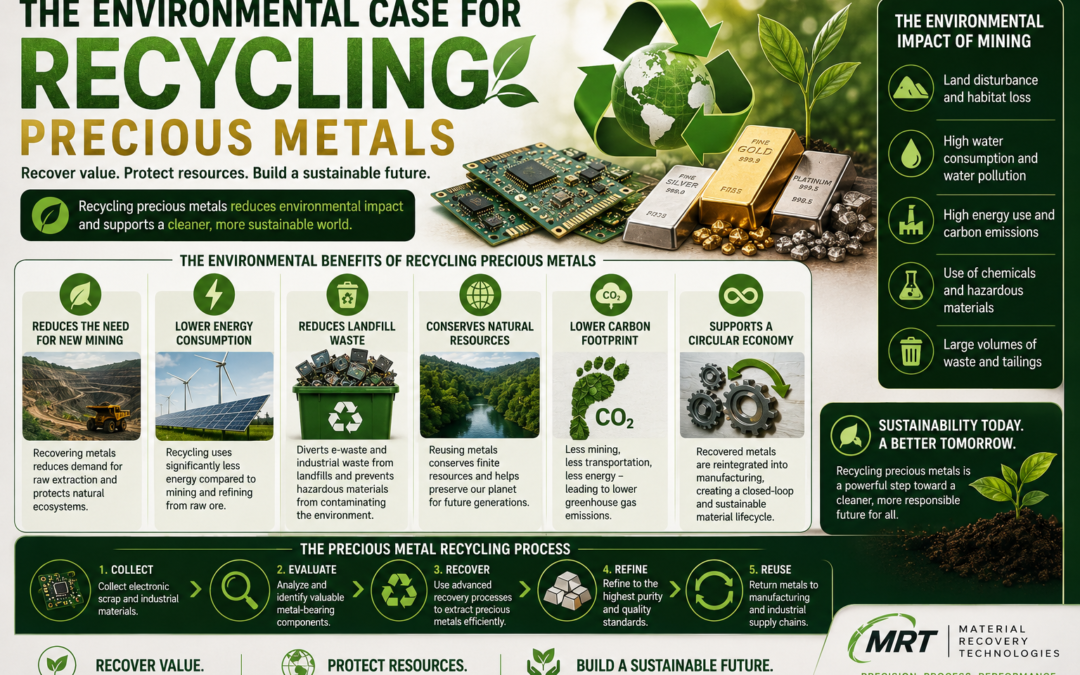
The Environmental Impact of Mining
Mining precious metals requires massive amounts of:
- Energy
- Water
- Land disturbance
- Chemical processing
Traditional mining operations can contribute to:
- Habitat destruction
- Soil erosion
- Water contamination
- High carbon emissions
In many cases, enormous volumes of earth must be processed to recover relatively small amounts of metal.
This creates substantial environmental strain.
Recycling Reduces the Need for New Mining
One of the biggest environmental benefits of precious metal recycling is simple:
Recovering metals already in circulation reduces demand for new extraction.
When gold, silver, platinum, and palladium are recovered from existing materials:
- Fewer raw materials need to be mined
- Less land must be disturbed
- Fewer natural resources are consumed
Recycling helps extend the life of the world’s existing metal supply.
E-Waste Contains Valuable Resources
Electronic waste is one of the fastest-growing waste streams in the world.
Yet many electronic components contain recoverable precious metals, including:
- Gold-plated connectors
- Circuit boards
- CPUs and chips
- Industrial electronic components
Instead of sending these materials to landfills, recycling allows valuable metals to be recovered and reused.
This reduces both waste and resource depletion.
Lower Energy Consumption
Producing metals from recycled material often requires significantly less energy than mining and refining raw ore.
This can help reduce:
- Fossil fuel consumption
- Greenhouse gas emissions
- Overall carbon footprint
Efficient recovery systems help manufacturers and recyclers support cleaner, more sustainable operations.
Reducing Landfill Waste
Improper disposal of electronic and industrial waste creates environmental risks.
Landfilled electronics may contain:
- Heavy metals
- Hazardous materials
- Non-biodegradable components
Recycling helps divert these materials from landfills and ensures valuable metals are responsibly recovered instead of discarded.
Supporting a Circular Economy
Precious metal recycling plays a key role in the circular economy.
Instead of the traditional model:
Mine → Use → Dispose
Recycling supports:
Recover → Reuse → Reintegrate
Recovered metals can return to manufacturing and industrial supply chains rather than being permanently lost.
This creates a more sustainable material lifecycle.
Why Recovery Efficiency Matters Environmentally
Environmental benefits depend heavily on recovery efficiency.
If recovery systems are inefficient:
- Valuable metals may still be lost
- More waste is generated
- Additional raw material demand continues
High-yield recovery systems maximize the amount of metal successfully captured from existing materials.
Better recovery means:
- Less waste
- Greater resource conservation
- Reduced environmental impact
Sustainable Manufacturing and ESG Goals
Many manufacturers and industrial organizations are strengthening:
- Sustainability initiatives
- ESG (Environmental, Social, Governance) programs
- Waste reduction strategies
Precious metal recycling supports these goals by helping businesses:
- Reduce environmental impact
- Improve resource efficiency
- Demonstrate responsible material management
Sustainability is increasingly becoming both an environmental and competitive advantage.
How Material Recovery Technologies Supports Sustainable Recovery
At Material Recovery Technologies (MRT), sustainability and recovery performance work together.
MRT focuses on:
- Accurate material evaluation
- Yield optimization
- Efficient recovery systems
- Transparent process tracking
The goal is to recover the maximum possible value from materials while minimizing waste and supporting responsible resource management.
Final Takeaway
Precious metal recycling is about more than recovering value — it’s about protecting resources for the future.
By recovering metals from electronics, machinery, and industrial materials, businesses can:
- Reduce landfill waste
- Lower environmental impact
- Decrease reliance on mining
- Support more sustainable manufacturing practices
Because in modern industry, sustainability is no longer separate from performance.
It’s part of it.
Recent Comments