
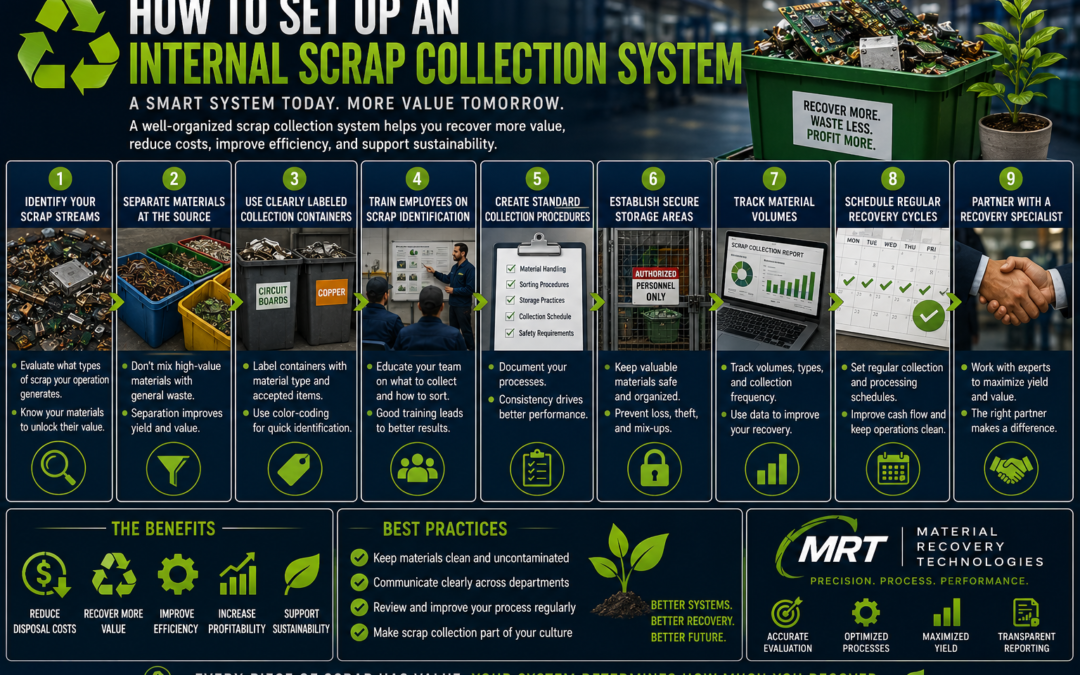
For manufacturers, recyclers, and industrial facilities, valuable scrap is often generated every single day.
The problem is that without a structured system, valuable materials can become:
- Mixed together
- Misidentified
- Lost during disposal
- Underutilized
An organized internal scrap collection system helps businesses recover more value, improve efficiency, and support sustainability goals.
Here’s how to build a system that works.
Why Scrap Collection Systems Matter
Many companies focus heavily on production efficiency but overlook material recovery.
Without a proper collection system:
- Valuable metals may end up in general waste
- Recovery yields can decrease
- Inventory visibility becomes difficult
- Disposal costs increase
A structured process helps transform scrap management into a controlled and measurable operation.
Step 1: Identify Your Scrap Streams
Start by evaluating what types of scrap your operation generates.
Common categories include:
- Electronic scrap (e-waste)
- Circuit boards and components
- Copper wiring and cables
- Aluminum and steel scrap
- Precious metal-bearing materials
- Obsolete equipment and machinery
Understanding your waste streams is the foundation of an effective recovery strategy.
Step 2: Separate Materials at the Source
One of the most important rules in scrap recovery is:
Don’t mix high-value materials with general waste.
Create dedicated collection areas for different material types.
Examples:
- Circuit boards
- CPUs and chips
- Gold-plated connectors
- Copper scrap
- Mixed electronics
Separating materials early helps:
- Improve recovery yield
- Reduce contamination
- Increase material value
Step 3: Use Clearly Labeled Collection Containers
Clear labeling prevents confusion and improves consistency.
Collection bins should include:
- Material type
- Accepted items
- Examples or photos if needed
Color-coded systems can also help employees quickly identify where materials belong.
Consistency is critical for long-term success.
Step 4: Train Employees on Scrap Identification
Even the best system fails without proper training.
Employees should understand:
- Which materials contain value
- What should be separated
- Why sorting matters
Simple training sessions can dramatically improve recovery performance and reduce contamination.
Focus on practical education, not just policy.
Step 5: Create Standard Collection Procedures
Your system should include documented workflows for:
- Material handling
- Sorting procedures
- Storage practices
- Collection schedules
- Safety requirements
Standard procedures help ensure that scrap collection remains consistent across departments and shifts.
Step 6: Establish Secure Storage Areas
Some scrap materials — especially electronic scrap and precious metal-bearing components — hold significant value.
Secure storage helps:
- Prevent material loss
- Improve inventory control
- Reduce theft risk
Storage areas should be:
- Organized
- Clearly labeled
- Accessible only to authorized personnel when necessary
Step 7: Track Material Volumes
Data is essential for improving recovery performance.
Track:
- Material types collected
- Collection frequency
- Weight or volume
- Recovery results
This helps businesses identify:
- Which materials generate the most value
- Where losses may occur
- Opportunities for process improvement
Over time, tracking creates better visibility into recovery performance.
Step 8: Schedule Regular Recovery Cycles
Allowing scrap to accumulate indefinitely can:
- Tie up valuable materials
- Create storage issues
- Delay revenue recovery
Regular processing schedules help:
- Improve cash flow
- Maintain cleaner operations
- Keep inventory manageable
Many companies benefit from smaller, more frequent recovery cycles.
Step 9: Partner With a Recovery Specialist
Not all scrap recovery systems are equal.
Working with an experienced recovery partner helps ensure:
- Accurate material evaluation
- Optimized recovery processes
- Transparent reporting
- Maximum yield potential
The right partner helps turn your internal collection system into a long-term value driver.
How Material Recovery Technologies Supports Internal Scrap Programs
At Material Recovery Technologies (MRT), recovery begins long before materials enter processing.
MRT supports businesses with:
- Material evaluation guidance
- Recovery optimization
- Yield-focused processing
- Transparent recovery tracking
The goal is to help companies build systems that recover more value while reducing waste and inefficiency.
Final Takeaway
An internal scrap collection system is more than a recycling program — it’s an operational strategy.
By identifying scrap streams, separating materials properly, training employees, and tracking recovery performance, businesses can:
- Recover more valuable material
- Improve operational efficiency
- Reduce waste and disposal costs
- Increase long-term profitability
Because in material recovery, the process starts the moment scrap is created.
Recent Comments