
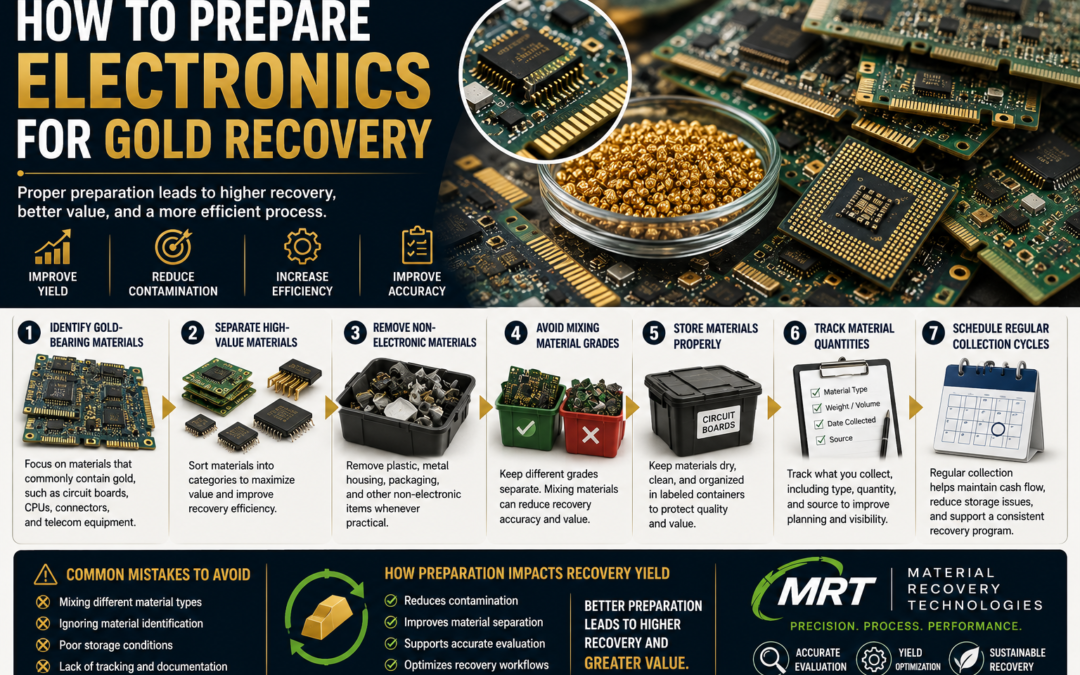
Successful gold recovery begins long before the recovery process itself.
The way electronic materials are collected, sorted, and prepared can have a significant impact on recovery yield, efficiency, and overall value.
Whether you’re handling outdated equipment, circuit boards, or industrial electronics, proper preparation helps ensure that valuable metals are recovered as effectively as possible.
Here’s what businesses should know about preparing electronics for gold recovery.
Why Preparation Matters
Gold is rarely found in large, visible quantities within electronics.
Instead, it is commonly located in:
- Gold-plated connectors
- Circuit boards
- CPUs and processors
- Integrated circuits
- Telecom equipment
- Industrial control systems
Because the gold is often distributed in small amounts across many components, preparation plays a critical role in maximizing recovery.
Proper preparation helps:
- Improve recovery yield
- Reduce contamination
- Increase processing efficiency
- Improve material evaluation accuracy
Step 1: Identify Gold-Bearing Materials
The first step is understanding which electronics are most likely to contain recoverable gold.
Common examples include:
Circuit Boards
High-grade boards often contain:
- Gold-plated contacts
- Integrated circuits
- Precious metal-bearing components
CPUs and Processors
Many processors contain:
- Gold bonding wires
- Gold-plated surfaces
- Recoverable precious metal content
Connectors and Gold Fingers
These components often contain concentrated gold plating and are among the most recognizable gold-bearing materials.
Telecom and Industrial Equipment
Older telecom systems and industrial electronics frequently contain higher-value components suitable for recovery.
Step 2: Separate High-Value Materials
Not all electronic scrap contains the same amount of recoverable gold.
Separating materials into categories helps maximize value.
Common categories include:
- Circuit boards
- CPUs and chips
- Gold-plated connectors
- Mixed electronics
- Wiring and cables
Proper segregation improves evaluation and helps recovery systems process materials more efficiently.
Step 3: Remove Non-Electronic Materials
Whenever practical, remove materials that do not contribute to recovery value.
Examples include:
- Plastic housings
- Excess packaging
- Non-electronic mounting hardware
- General debris
Reducing unnecessary material lowers handling costs and helps concentrate valuable components.
Step 4: Avoid Mixing Material Grades
One of the most common mistakes is combining high-grade electronic scrap with lower-value materials.
For example:
- High-grade server boards should remain separate from low-grade power boards.
- Gold-plated connectors should be separated from general electronic scrap.
Keeping grades separate improves:
- Recovery accuracy
- Material valuation
- Yield optimization
Step 5: Store Materials Properly
Proper storage protects both material quality and value.
Best practices include:
- Keeping materials dry
- Preventing contamination
- Using labeled containers
- Maintaining organized inventory systems
Good storage practices also simplify material tracking and evaluation.
Step 6: Track Material Quantities
Recording what is being collected helps businesses understand recovery opportunities.
Track:
- Material type
- Weight or volume
- Collection dates
- Source locations
This information improves planning and provides better visibility into potential recovery value.
Step 7: Schedule Regular Collection Cycles
Allowing electronic scrap to accumulate indefinitely can create storage and inventory challenges.
Regular collection schedules help:
- Improve cash flow
- Maintain organization
- Reduce storage requirements
- Support consistent recovery programs
Many organizations find that smaller, recurring recovery cycles are easier to manage than large, infrequent shipments.
Common Preparation Mistakes to Avoid
Mixing Different Material Types
Combining high-value and low-value electronics can reduce recovery efficiency.
Ignoring Material Identification
Not all electronic components contain meaningful precious metal content.
Poor Storage Conditions
Moisture, contamination, and disorganization can complicate evaluation and processing.
Lack of Tracking
Without records, it becomes difficult to understand recovery performance over time.
How Preparation Impacts Recovery Yield
Yield measures how much recoverable gold is successfully captured during processing.
Proper preparation helps improve yield by:
- Reducing contamination
- Improving material separation
- Supporting accurate evaluation
- Optimizing recovery workflows
The better the preparation, the greater the opportunity to recover available value.
How Material Recovery Technologies Supports Electronic Recovery
At Material Recovery Technologies (MRT), preparation is viewed as a critical part of the recovery process.
MRT focuses on:
- Accurate material evaluation
- Recovery optimization
- Yield-focused processing
- Transparent performance tracking
By starting with properly prepared materials, businesses can improve both recovery performance and financial outcomes.
Final Takeaway
Preparing electronics for gold recovery is one of the most important steps in maximizing value.
By identifying gold-bearing materials, separating high-value components, reducing contamination, and maintaining organized collection systems, businesses can:
- Increase recovery yield
- Improve efficiency
- Recover more value from electronic scrap
- Support long-term sustainability goals
Because when it comes to precious metal recovery, success starts before the recovery process even begins.
Recent Comments