
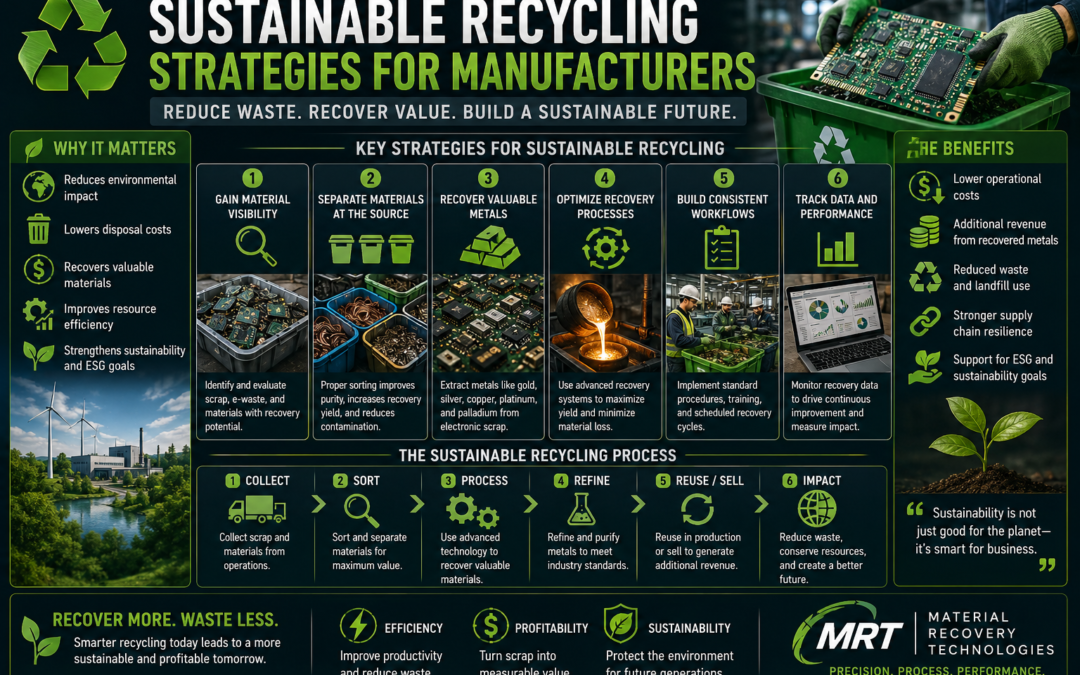
Sustainability is no longer just a trend in manufacturing — it’s becoming a business necessity.
Manufacturers today face increasing pressure to:
- Reduce waste
- Improve operational efficiency
- Lower environmental impact
- Recover more value from materials
One of the most effective ways to achieve these goals is through smarter recycling and material recovery strategies.
From electronic scrap to production byproducts, sustainable recycling can help manufacturers reduce costs while supporting long-term environmental and operational performance.
Let’s explore how.
Why Sustainability Matters in Manufacturing
Modern manufacturing consumes large amounts of raw materials, energy, and resources.
Without effective recycling systems, valuable materials often end up:
- In landfills
- Lost during production
- Underutilized during equipment replacement
Sustainable recycling strategies help manufacturers:
- Recover reusable materials
- Reduce disposal costs
- Improve resource efficiency
- Support environmental initiatives
In many cases, sustainability and profitability go hand in hand.
Start With Material Visibility
A strong recycling strategy begins with understanding what materials are moving through your operation.
Manufacturers should evaluate:
- Production scrap
- Electronic waste
- Outdated machinery
- Metal-bearing components
- Packaging and secondary materials
Many facilities are surprised to discover how much recoverable value already exists within their waste streams.
Separate Materials at the Source
One of the most important sustainability strategies is proper material separation.
When materials are mixed together:
- Recovery becomes less efficient
- Contamination increases
- Valuable metals may be lost
Separating materials at the source helps improve:
- Recovery yield
- Material purity
- Processing efficiency
This includes separating:
- Precious metal-bearing materials
- Copper and aluminum scrap
- Circuit boards and electronic components
- Plastics and non-metal waste
Better sorting leads to better recovery outcomes.
Recover Valuable Metals From E-Waste
Manufacturers often generate electronic scrap during:
- Equipment upgrades
- Control system replacements
- Production line modernization
These materials may contain:
- Gold
- Silver
- Copper
- Palladium
- Platinum
Instead of treating e-waste as disposal material, manufacturers can recover valuable metals and reduce environmental impact at the same time.
Reduce Waste Through Recovery Optimization
Sustainability is not just about recycling — it’s about maximizing what gets recovered.
Recovery optimization focuses on:
- Reducing material loss
- Improving recovery yield
- Increasing reuse potential
Even small improvements in recovery efficiency can significantly reduce waste over time.
Build Consistent Recycling Workflows
Sustainable recycling works best when it becomes part of daily operations.
Manufacturers benefit from:
- Standardized sorting procedures
- Clearly labeled collection systems
- Scheduled recovery cycles
- Employee training and accountability
Consistency improves both environmental performance and operational efficiency.
Track Recovery Data and Performance
Data plays a major role in modern sustainability programs.
Tracking recycling performance helps manufacturers understand:
- Material volumes
- Recovery rates
- Waste reduction progress
- Financial return from recovered materials
Data-driven recycling programs create visibility and support continuous improvement.
Reduce Reliance on Raw Material Extraction
Recovering and reusing metals helps reduce demand for newly mined materials.
This supports:
- Resource conservation
- Lower environmental impact
- More sustainable supply chains
As manufacturers look to improve ESG and sustainability initiatives, material recovery becomes increasingly important.
The Financial Benefits of Sustainable Recycling
Sustainability is often associated with environmental responsibility — but it also offers financial advantages.
Effective recycling strategies can help manufacturers:
- Reduce disposal expenses
- Recover valuable metals
- Improve inventory efficiency
- Generate additional revenue streams
In many operations, sustainable recovery systems create measurable economic value.
How Material Recovery Technologies Supports Sustainable Manufacturing
At Material Recovery Technologies (MRT), sustainability and recovery efficiency work together.
MRT focuses on:
- Accurate material evaluation
- Optimized recovery systems
- Yield improvement
- Transparent recovery tracking
The goal is to help manufacturers recover more value while reducing waste and supporting long-term sustainability objectives.
Final Takeaway
Sustainable recycling is no longer optional for modern manufacturers — it’s a strategic advantage.
By improving material visibility, separating valuable scrap, optimizing recovery, and building consistent recycling systems, manufacturers can:
- Reduce waste
- Recover more value
- Improve operational efficiency
- Support environmental goals
Because in modern manufacturing, sustainability is not just about reducing impact.
It’s about recovering opportunity.
Recent Comments