
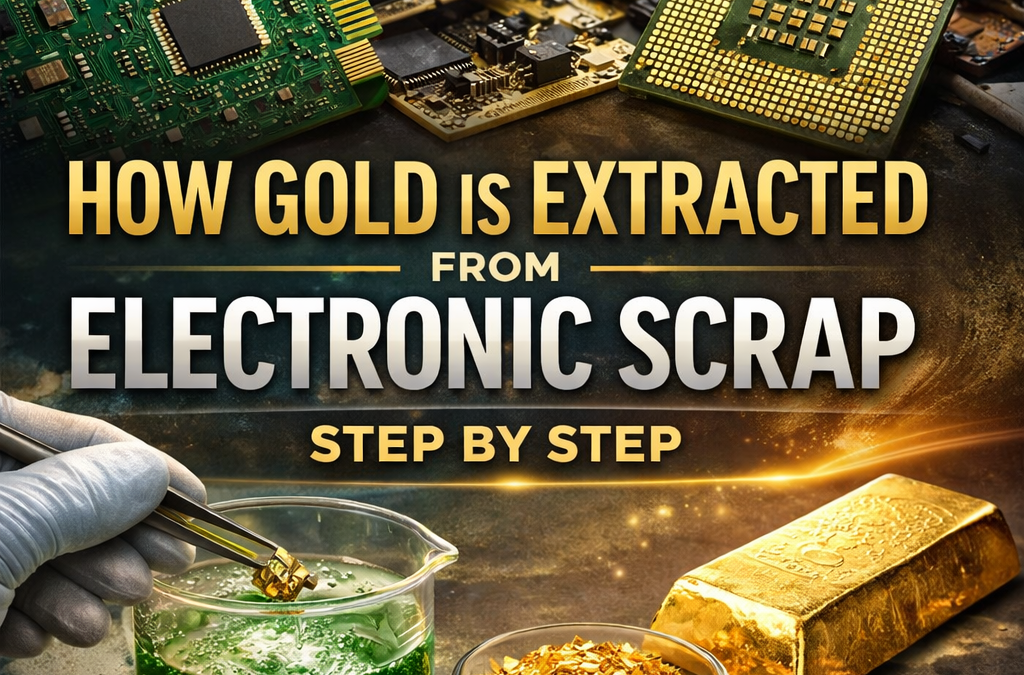
Electronic scrap (often called e-waste) is one of the richest modern sources of recoverable gold. Inside computers, servers, circuit boards, and connectors are tiny but valuable amounts of gold used for conductivity and corrosion resistance. When done correctly, gold recovery from electronics can be highly profitable and environmentally responsible.
Below is a clear, step-by-step breakdown of how gold is extracted from electronic scrap using modern professional methods.
Step 1: Collecting and Sorting Electronic Scrap
The process starts with material collection and sorting. Not all electronic scrap contains the same amount of gold.
Common gold-bearing materials include:
- Printed circuit boards (PCBs)
- Edge connectors and gold fingers
- CPUs and processors
- Memory modules
- Telecom and industrial control boards
At this stage, materials are separated by type, grade, and gold content. Proper sorting is critical because it directly affects recovery yield and final value.
Step 2: Removing Non-Metal Components
Before gold extraction begins, non-metal materials must be removed.
This includes:
- Plastics
- Ceramics
- Fiberglass
- Coatings and adhesives
Mechanical processes such as shredding, grinding, or controlled dismantling are used to expose the metal-bearing components. The goal is to isolate the parts that actually contain precious metals.
Step 3: Concentrating Precious Metals
Once the scrap is processed, refiners work to concentrate the precious metals.
This step may involve:
- Density separation
- Screening
- Specialized mechanical separation
By reducing bulk material and increasing metal concentration, the recovery process becomes more efficient, accurate, and cost-effective.
Step 4: Chemical Gold Leaching (Non-Smelting Process)
Modern gold recovery from electronic scrap typically uses a chemical leaching process, not traditional smelting.
Here’s how it works:
- The prepared material is placed into a controlled chemical solution.
- The solution dissolves gold without burning or melting the base metals.
- Gold separates at the molecular level.
This approach:
- Preserves more gold
- Reduces loss from oxidation
- Avoids extreme heat
- Improves overall yield
Chemical recovery is especially effective for low-volume, high-value electronic scrap.
Step 5: Gold Separation and Precipitation
After leaching, gold is chemically separated from the solution.
This is done by:
- Adjusting solution chemistry
- Causing gold to precipitate out
- Filtering and collecting the gold solids
The recovered gold appears as a fine powder or concentrate, ready for final refining.
Step 6: Refining and Purification
The collected gold concentrate is then refined to high purity.
Refining removes:
- Trace metals
- Chemical residues
- Impurities from the extraction stage
The result is gold refined to industry-accepted purity levels, suitable for resale, reuse, or reintegration into manufacturing.
Step 7: Testing, Assaying, and Reporting
Professional refiners finish the process with accurate testing and reporting.
This includes:
- Lab assays to confirm gold content
- Weight verification
- Detailed recovery reports
Transparent reporting ensures clients know exactly:
- How much gold was recovered
- The purity level
- The value of their material
Why Electronic Scrap Is a Powerful Gold Source
Electronic scrap often contains more gold per ton than mined ore. With the right recovery process, businesses can turn discarded electronics into a consistent revenue stream.
Key benefits include:
- Higher recovery yields
- Faster processing times
- Improved cash flow
- Environmentally responsible recycling
Final Thoughts
Gold extraction from electronic scrap is a precise, step-by-step process that blends science, engineering, and chemistry. When handled by experienced professionals using modern non-smelting methods, it delivers better yields, cleaner recovery, and reliable results.
If your business generates electronic scrap, understanding this process helps you make smarter decisions—and ensures you get the full value from materials you already own.
Recent Comments